DuoFit: gamer compatibility that goes beyond shared games
Shared taste is a nice start. It is not compatibility. Two people can both main the same game and still want completely different things from it — one is grinding ranked at midnight, the other is decorating an island on Sundays. DuoFit is Midnight Lobby's way of looking past the title on your profile and at the way you actually play, so the people you see are people you could genuinely click with.
Why liking the same game isn't enough
"What do you play?" is the first question gamers ask each other, and it is almost useless on its own. A favorite title tells you what someone bought. It doesn't tell you when they play, how competitive they get, whether they want a teammate or someone to sit quietly beside, or whether a bad loss ruins their night.
Most dating apps stop at the title. They let you list a game as an interest and call it a personality. DuoFit starts where that stops. It treats your gaming habits as signal about your lifestyle, your schedule, and how you like to spend time with another person, because for a lot of players that is exactly what they are.
The dimensions DuoFit looks at
DuoFit reads a handful of things that shape whether two players actually fit, not just whether their libraries overlap:
- Casual or competitive. Whether you play to relax or play to win.
- How you like to play together. Solo, co-op, or head-to-head multiplayer.
- Preferred genres. The kinds of games you reach for, beyond any single title.
- Your gaming schedule. Weeknights, weekend marathons, quiet mornings.
- Session length. Quick matches versus long sit-down sessions.
- Communication style. Chat-first, voice-comfortable, or somewhere between.
- Platform and crossplay. PC, console, mobile, and whether you can actually play together.
- Couch co-op or online. Same-room energy versus playing side by side from afar.
- Social energy and intent. How much togetherness you want, and what you're looking for on Midnight Lobby in the first place.
No single dimension decides a match. DuoFit weighs them together and surfaces the people who line up with you on the ones that tend to matter most.
Same game, different players: two quick examples
Two Valorant players. One queues ranked every night and wants a duo who communicates on voice and reviews the loss. The other plays unrated after work to unwind and mutes the lobby. Same game, opposite needs. DuoFit sees the gap and doesn't oversell the match on the shared title alone.
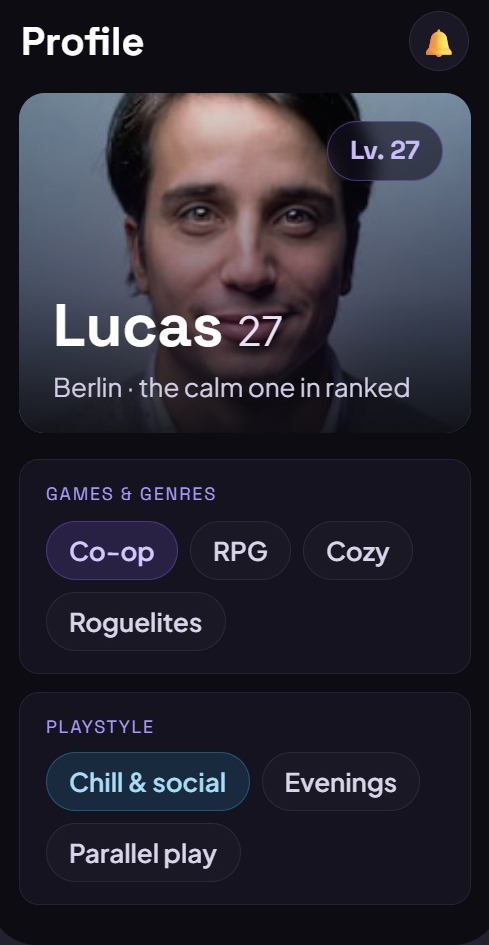
Two cozy-game players. One spends hours in Stardew Valley and Animal Crossing, mostly solo, mostly weekends, and wants someone to play parallel and chat with. Another player's profile lists the same games but they actually want fast co-op and voice every night. The library matches; the rhythm doesn't. DuoFit reads the rhythm.
How to read your DuoFit score
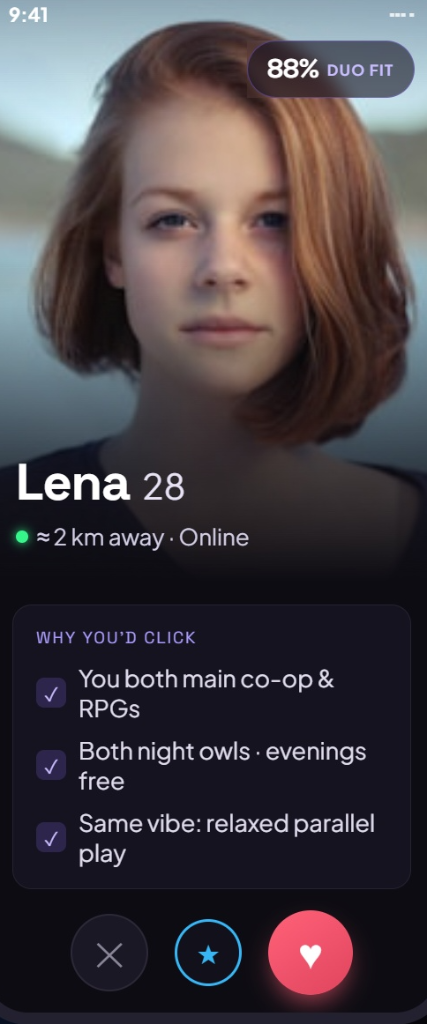
Think of the DuoFit score as a conversation starter, not a verdict. A high score means your playstyles, schedules, and preferences line up in ways that tend to make spending time together easy. A lower score isn't a rejection; it just means there's less obvious overlap to build on, and you might want a reason beyond the games. Midnight Lobby shows you some of the "why" behind a score so you can decide for yourself, rather than trusting a number.
What DuoFit is, and what it isn't
DuoFit is a discovery aid. It helps you spend your attention on people you're more likely to enjoy, and it gives you something real to talk about when you match. It is not a personality test, it is not a scientifically validated psychological assessment, and it does not predict whether a relationship will work. People are more than their playstyle. DuoFit just makes the first step less random. See how Midnight Lobby differs from swipe-first dating apps.
Where DuoFit shows up in the app
You'll see DuoFit woven through Midnight Lobby: on profiles as you browse, as part of why a particular person is being suggested to you, and as context once you match. It pairs naturally with games that help matches break the ice and with meeting gamers through a lobby, where playing together tells you the things a score never could.